riccardo@polimi:~/portfolio
$ whoami
Hi, I'm Riccardo. Yes, another engineer, but (mostly) fun at parties.

$ cat ./about.txt
I grew up in a small town in Piedmont, and after learning the ropes
in Ireland, Turin and Milan, I had an incredibly exciting master
in California, at UC Berkeley, which is what got me into research.
Now I'm doing a PhD at Polimi, in the RL3 group.

Translation: I've moved around a lot, collected too many student IDs,
and somehow still haven't figured out how to cook pasta properly
(yes, I know, shame on me, I'm Italian).

$ ls ./now/
phd_polimi/   rialco_srl/

$ echo $LOOKING_FOR
AI / ML / RL (sequential decision making · multi-agent systems ·
human feedback)
Marketing (dynamic pricing · recommender systems · online advertising)

$ echo $INTERESTS
🎾 padel  ·  🏃 running  ·  ⚽ Inter Milan  ·  ✈️ travel

$ _
// 01

where to find me in september

/* 2026 */
  1. Drift Happens poster
    07 → 11 sep · naples

    ECML PKDD 2026

    Europe's main machine learning conference, where I'm presenting Drift Happens as a poster at the QCDS workshop.

  2. Riccardo at Politecnico di Milano
    from 11 sep · milan

    Politecnico di Milano

    I'll be starting my PhD here, at a desk on the fifth floor of Building 21, in Via Bassini.

  3. Riccardo running PolimiRun Milano 26
    27 sep · milan

    PolimiRun Milano 26

    Ten kilometres across Milan, running from Campus Bovisa to Campus Leonardo.

  4. Tennis Club Alba from above
    weekends · alba

    Tennis Club Alba

    Most weekends I'm on a padel court at Tennis Club Alba, so if you want a match just write me.

// 02

about

/* who, what, why */

Hi, I'm Riccardo. I do research in reinforcement learning, where I work on sequential decision making, multi-agent systems and learning from human feedback.

It's a PhD I've just started at Politecnico di Milano, after an MEng in EECS at UC Berkeley, a master at Bocconi and an engineering degree at Politecnico di Torino.

Away from the desk I'm usually playing padel and running, watching Inter Milan, and, in case my story hasn't made it obvious already, travelling as much as I can, meeting new people and seeing new places.

I tend to be very competitive (most of the time in a playful, healthy way), and I like working with people who raise the bar and still make it fun.

// riccardo.stack
fuel espresso · pasta · gelato
training padel (sponsored, top 200 italy) · running · swimming
team Inter Milan: for the highs, the lows, and the swearing in between
moves nizza monferrato → ireland → turin → milan → berkeley → milan
langs italian · english (ielts 8/9) · french (nodding politely)
volunteering OFTAL (transport coordinator) · Banco Alimentare · AGAPE Onlus
~/life/ 5 frames
01padel.jpg
02running.jpg
03ski_italy.jpg
04warriors.jpg
05party.jpg
~/life/travel/ 6 frames
01cambodia.jpg
02finland.jpg
03toronto.jpg
04golden_gate.jpg
05hollywood.jpg
06grand_canyon.jpg
// 03

current research

/* what I'm building right now */
~/research/hydramarl.md 2026 · neurips '26 main track · under review
a1a2 a3a4 shared trunk head 1head 2 head 3head 4 one parameter λ moves between the two regimes
actor & critic · shared trunk ⇄ per-agent heads λ = 1.00 · shared

HydraMARL

A foundational study of parameter sharing in cooperative multi-agent reinforcement learning. HydraMARL decomposes each agent's policy and value networks into a population-shared trunk and per-agent heads, applied symmetrically across actor and critic; a single continuous parameter spans the full spectrum from complete sharing to full independence. Systematic experiments on the VMAS benchmark suite identify the optimal sharing regime and characterise its sensitivity to task structure, degree of cooperation, and population size.

When many AI agents learn together, parts of their neural networks can be shared. We isolate how much sharing actually helps, and expose the trade-off between learning fast and learning to specialize.

  • multi-agent rl
  • parameter sharing
  • neurips '26
~/research/klip_ppo.md 2026 · arXiv preprint · klip-ppo.org ↗
0 + I_kill I_kill I_pass I_pass I_in 1−ε 1 1+ε importance ratio w → advantage Â
w–Â plane · where clipping suppresses the update I_in · β = 0

KLip-PPO

A theoretical unification of PPO-Clip and PPO-KL, the two dominant variants of the most widely used policy-gradient algorithm in modern reinforcement learning. We prove a per-sample equivalence: the gradient of the clipped surrogate is exactly a KL penalty whose coefficient varies per sample, in closed form in the importance ratio and the advantage. The identity holds at every update step, and on five MuJoCo benchmarks the two losses trace indistinguishable training curves. The result collapses what was treated as a divide in the field into a single design space, and uncovers a principled family of generalizations of PPO.

PPO is the most widely used algorithm in modern RL. Its two main variants were treated as different ideas: we prove they compute the same update, and verify the identity across five MuJoCo benchmarks.

  • rl theory
  • ppo
  • policy optimization
~/research/drift_happens.md 2026 · published @ qcds, ecml-pkdd '26 · drift-happens.org ↗
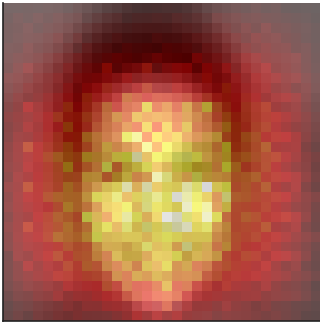
The mean yearbook portrait per decade, 1910s to 2010s.
~/yearbook/mean_face · mean portrait per decade 1910s
eval 1960 eval 1980 eval 2000 cnn_l
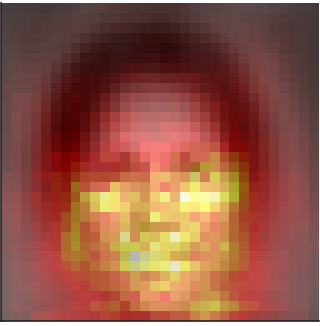
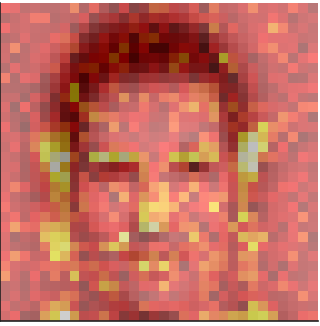
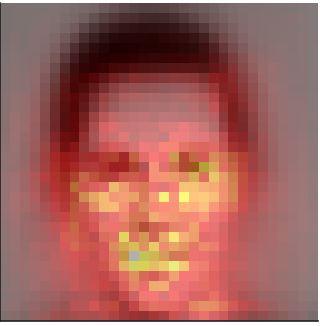
CNN saliency, eval 1960: attribution concentrates on facial features.
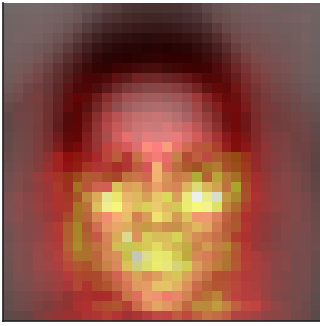
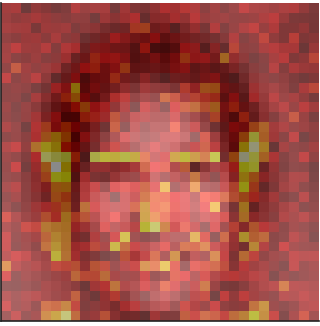
CNN saliency, eval 1980.
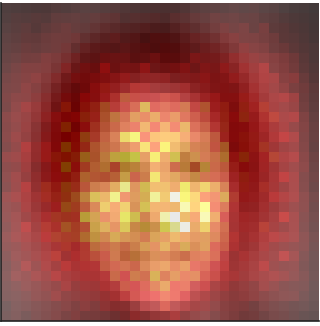
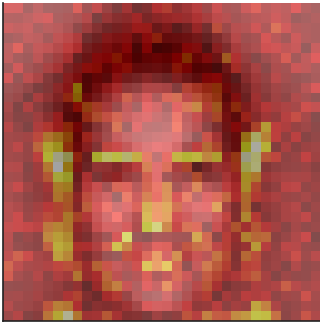
CNN saliency, eval 2000.
resnet_s
ResNet saliency, eval 1960.
ResNet saliency, eval 1980.
ResNet saliency, eval 2000.
mlp_l
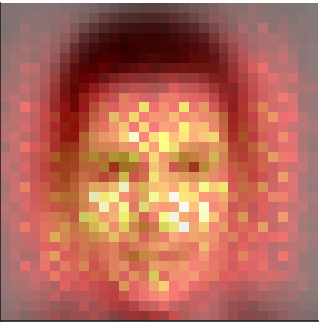
MLP saliency, eval 1960: attribution spread over the whole image.
MLP saliency, eval 1980.
MLP saliency, eval 2000.
saliency · trained ≤ 1950 · where each net looks eval 1960

Drift Happens

What happens to a neural network when the world drifts away from the data it was trained on? We measured it across a century of portraits, a decade of product reviews and 25 years of paper abstracts. The model with the best held-out score at the training cutoff is often the least robust once deployed. What governs how fast a model degrades is the strength of its inductive bias: a stronger bias extracts the most discriminative, period-specific features and leads in distribution, yet those same features are the first to lose their meaning as the data drifts. Frozen pretrained encoders sit in a different regime, conceding in-distribution accuracy in return for steadier behaviour over time. Choose architectures for the expected retraining horizon, not for in-distribution accuracy alone.

AI models lose accuracy as the world drifts away from their training data. Across decades of faces, reviews and papers, the models that fit the training years most tightly are the first to fall apart on the years after.

  • neural nets
  • distribution shift
  • empirical
~/robotics/hold_your_plate.md 2025 · robotics · holdurpla7e.org ↗
~/sim/arm_hero.webm · policy rollout t=0.0s
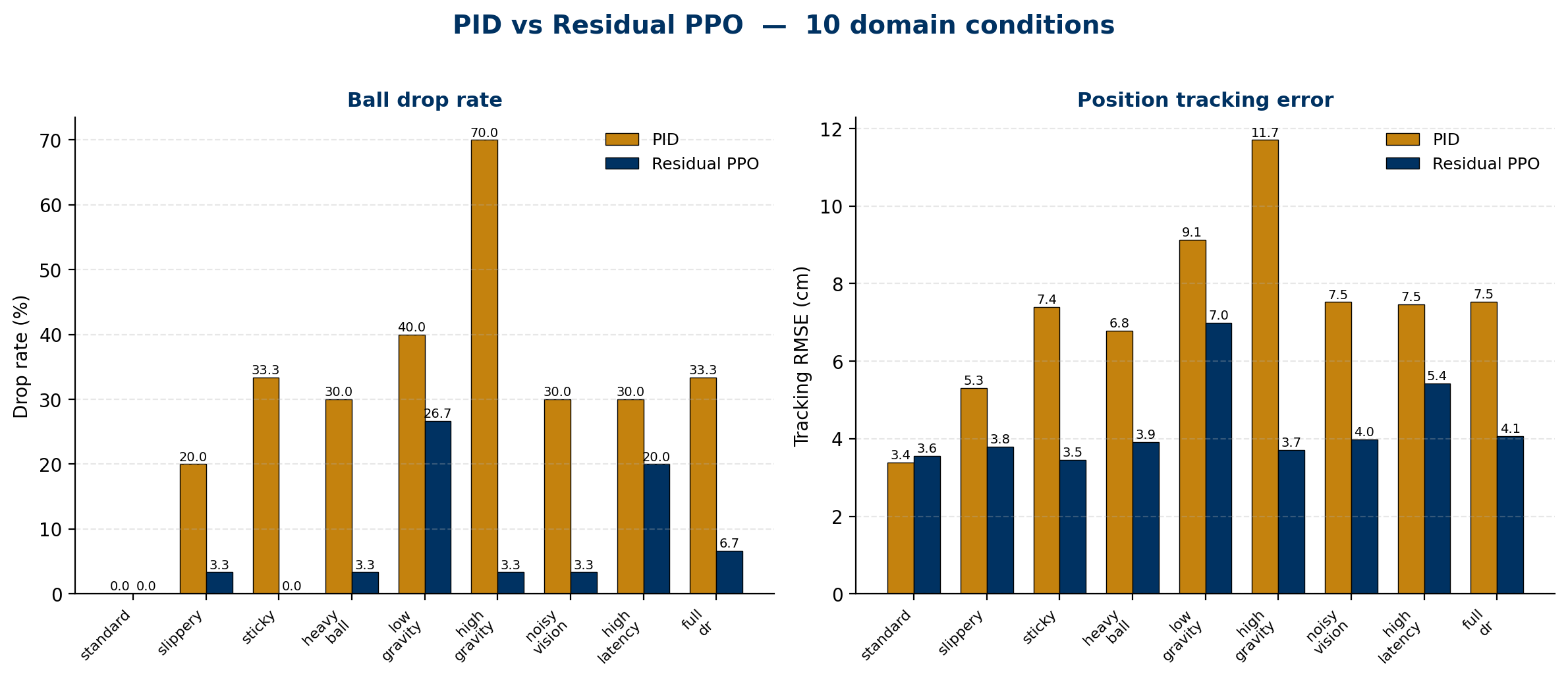
Bar charts comparing PID and Residual PPO across 10 domain conditions: ball drop rate and tracking error.
pid vs residual ppo · 10 conditions · click to zoom drop 70→3.3%

Hold Your Plate

Real-time ball-on-plate stabilization on a UR7e collaborative arm, with ArUco vision tracking through an Intel RealSense camera, orchestrated on a full ROS 2 stack and a MuJoCo simulation pipeline. The system compares three controllers: a hand-tuned PID, an MPC on the linearized dynamics, and a residual learning approach that augments the PID with a small PPO policy trained under domain randomization (varied mass, friction, sensing delay), pairing the reliability of model-based control with learned robustness to unmodeled effects.

A UR7e robotic arm balancing a ball on a tilting plate, with a camera tracking it in real time. Compares three controllers (classical, model-based, and learned) on a ROS 2 stack.

  • ros 2
  • residual rl
  • ur7e
  • mujoco
  • vision
~/research/demand.md 2026 · framework

DEMAND / no-steady-state

A research framework for multi-agent reinforcement learning under non-stationary demand, targeting fleet dispatch problems in delivery, ride-hailing, and logistics. The platform models the full operational stack (order matching, routing, courier repositioning) under realistic exogenous drift, with plug-and-play integration of 15+ RL algorithms (PPO, SAC, multi-agent variants, classical heuristics). Designed for the controlled drift studies that current MARL benchmarks cannot support.

A research platform for studying how AI dispatch systems (food delivery, ride-hailing) hold up when demand keeps changing. Full simulation pipeline with many algorithms wired in.

  • multi-agent rl
  • simulation
  • operations
~/capstone/no_free_lunch.md 2026 · meng capstone thesis · informs/meituan

No Free Lunch for Food Delivery

A multi-objective study of courier-assignment policies on real Meituan delivery data, where customer latency, courier earnings, platform margin, and restaurant reliability conflict. We benchmark classical heuristics and modern reinforcement learning, then propose PRISM: a hybrid architecture combining learned cost prediction, RL, and constraint optimization that treats Pareto trade-offs as first-class objectives instead of collapsing them into a scalar reward.

In food delivery, customers, couriers, platforms, and restaurants all want different things from the same decision. Built on real Meituan data, PRISM treats those trade-offs as first-class instead of pretending they aren't there.

  • operations research
  • multi-objective
  • real data
// 04

snapshots

/* a portrait of my life · the paintings hide easter eggs */
~/life/quadri/ 5 frames · easter eggs inside
01quadro_01.jpgEE
02quadro_02.jpgEE
03quadro_03.jpgEE
04quadro_04.jpgEE
05quadro_05.jpgEE
// 05

cv

/* timeline */

# education

  1. Sep 2026 → now
    Politecnico di Milano · Milan, IT
    PhD in Information Technology · 42nd cycle Reinforcement learning from human feedback in the multi-agent setting, with the RL3 group (AIRLab, DEIB). Advised by Prof. Alberto Maria Metelli and Prof. Marco Mussi, on the MUR project Unified Learning from Diverse Human Feedback (HUmLrn, FIS-2023-02598).
  2. Aug 2025 → May 2026
    UC Berkeley · Berkeley, CA GPA 4.0 / 4.0
    MEng in Electrical Engineering & Computer Sciences Statistical learning theory (CS C281A, Recht), machine learning (CS 289A), deep reinforcement learning (CS 285, Levine), optimization (EECS 227AT, Sojoudi), robotics (EECS C206A). Capstone advised by Prof. Paul Grigas (IEOR). Fung Excellence Scholar: Berkeley Engineering merit award for top MEng students.
  3. Sep 2023 → May 2025
    Bocconi University · Milan, IT 110L / 110 (cum laude)
    Master in Marketing & Communication (MiMeC) Valedictorian: best overall student of the cohort. Merit-based scholarship. Quantitative program focused on analytics, consumer behavior, pricing strategy, and data-informed decision-making.
  4. Sep 2017 → Jul 2021
    Politecnico di Torino · Turin, IT 110L / 110 (cum laude)
    BSc in Electronic & Communications Engineering Top of class · English-taught ICT engineering program. Honors track, Intraprendenti (Young Talents Program): top 200 students university-wide. Thesis on Digital PLL simulation.
  5. Aug 2015 → Jun 2016
    Exchange year · English-speaking secondary school Full-immersion academic year alongside Irish peers, within the Liceo Scientifico Internazionale track. Played in the school basketball team.

# experience

  1. Jan → Jul 2025
    Lenovo · Milan, IT
    Marketing Specialist · CRM Digital Services CRM and marketing analytics: customer segmentation, campaign analysis, CRM data exploration. Translated analytical insights into marketing and growth inputs inside a global, data-intensive corporate environment.
  2. 2021 → 2025
    Rialco S.R.L. · Milan, IT
    CEO / Product Manager / Growth Manager Owned strategic direction and P&L of a digital consulting firm. Led discovery → ship for digital products (web, e-commerce, internal tooling). Ran acquisition and conversion across SEO, paid, and social, defining KPIs and using analytics to prioritize what moved the funnel.
  3. Jan → Jul 2020
    Biesse Sistemi S.R.L. · Nizza Monferrato, IT
    Intern · Software Development Voice-controlled application for automated taxi booking: application logic and system integration alongside a senior software developer.

# publications & preprints

  1. May 2026
    HydraMARL: Isolating the Parameter-Sharing Spectrum in Multi-Agent Reinforcement Learning under review
    Holzinger, R.* & Colletti, R.* Submitted to NeurIPS 2026, main track.
  2. Jun 2026
    KLip-PPO: A per-sample KL perspective on PPO-Clip preprint
    Colletti, R.* & Holzinger, R.* arXiv:2606.23932 · klip-ppo.org · code · w&b artifacts · NeurIPS 2026 workshop submission planned.
  3. Sep 2026
    Drift Happens: An Empirical Study of Neural Architecture Robustness to Temporal Distribution Shift published
    Holzinger, R.* & Colletti, R.* QCDS Workshop @ ECML-PKDD 2026, Naples · arXiv:2607.05908 · proceedings · drift-happens.org · code · w&b artifacts.

* equal contribution

# awards & scholarships

  1. 2025
    Fung Excellence Scholarship · UC Berkeley Awarded by Berkeley Engineering to top MEng candidates.
  2. 2025
    Valedictorian + Merit-Based Scholarship · Bocconi University Best overall student of the cohort.
  3. 2025
    Data Science and Machine Learning · MIT IDSS Making Data-Driven Decisions · professional certificate program (May–Oct 2025).
  4. 2017 → 2021
    Intraprendenti (Young Talents Program) · Politecnico di Torino Top 200 students university-wide.
  5. 2016
    Italian Mathematical Olympiad, national finalist · team competition Flown back from the exchange year in Ireland for one week to compete at the national finals.

# volunteering

  1. 2010 → now
    OFTAL · volunteer, now Transport Coordinator 15+ years supporting pilgrimages that bring ill and economically disadvantaged people to Lourdes and other shrines.
  2. 2014 → 2018
    Fondazione Banco Alimentare Onlus Food selection and distribution to families in need.
  3. 2014
    AGAPE Onlus Food sorting and distribution for the local community.

$ open cv.pdf ↗ · resume.pdf ↗